At Maison Gainsbourg
Will Yeoman visits a museum dedicated to the life and art of one of France's most famous provocateurs, singer-songwriter Serge Gainsbourg
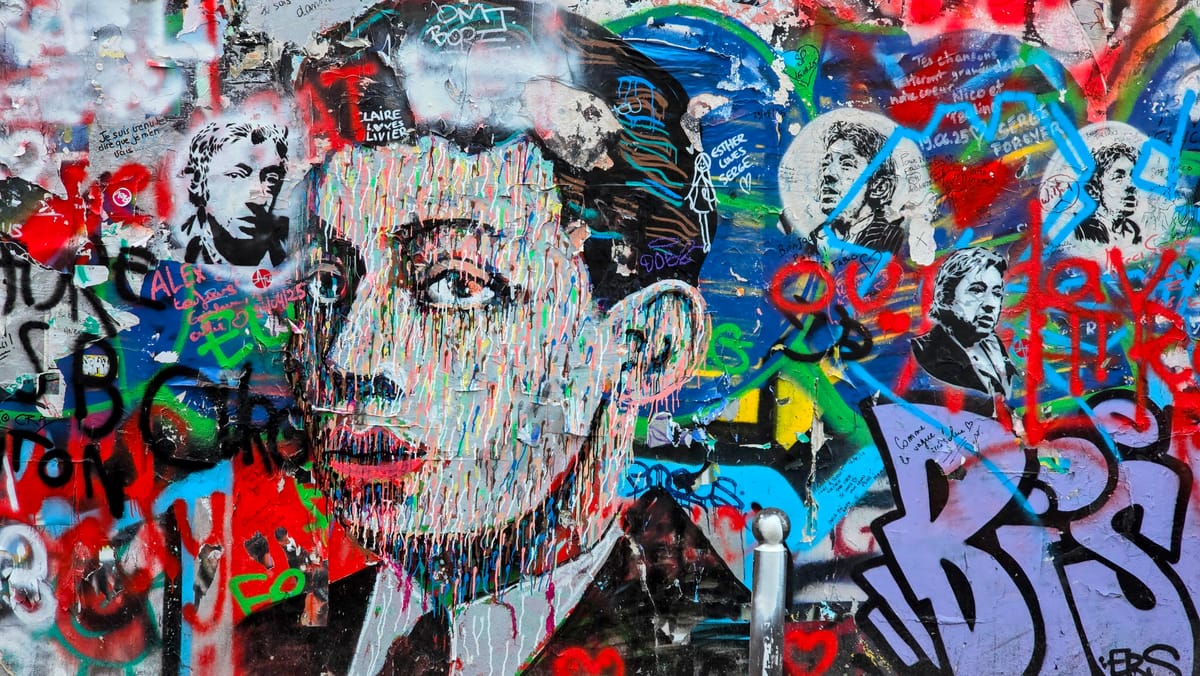
On rue de Verneuil in Paris’s elegant 7th arrondissement, two buildings stand roughly opposite each other. At number 5 bis is the home in which Serge Gainsbourg lived out his final 22 years. Its façade is a riot of graffiti and street art. At number 14, a museum sporting a contrastingly unadorned frontage chronicles the life and work of this provocateur who scandalised and seduced a nation.
Together, they comprise the Maison Gainsbourg.
Your experience begins at 5 bis, where small groups, often just two at a time, are able to see an interior frozen in 1991, the year Gainsbourg died. Charlotte Gainsbourg, his daughter, has maintained the house as a kind of reliquary – every cigarette butt, every half-empty wine bottle remains exactly as her father left it. The walls are painted entirely black, a choice inspired by Salvador Dalí’s home and designed to calm Gainsbourg’s hyperactive mind. No photography permitted, alas.
Like that of a virtual Vergil, Charlotte’s recorded voice, accompanied by an immersive soundtrack from unpublished archives, leads you through the claustrophobic spaces of this artistic underworld. You see the rows of white Repetto Zizi jazz shoes that Jane Birkin first bought for Gainsbourg, now iconic as the man himself. The piano where he composed over 550 songs sits silent. The intimate detritus of genius surrounds you: books, artworks, kitchen implements. Look, listen. Perhaps they will divulge their secrets.
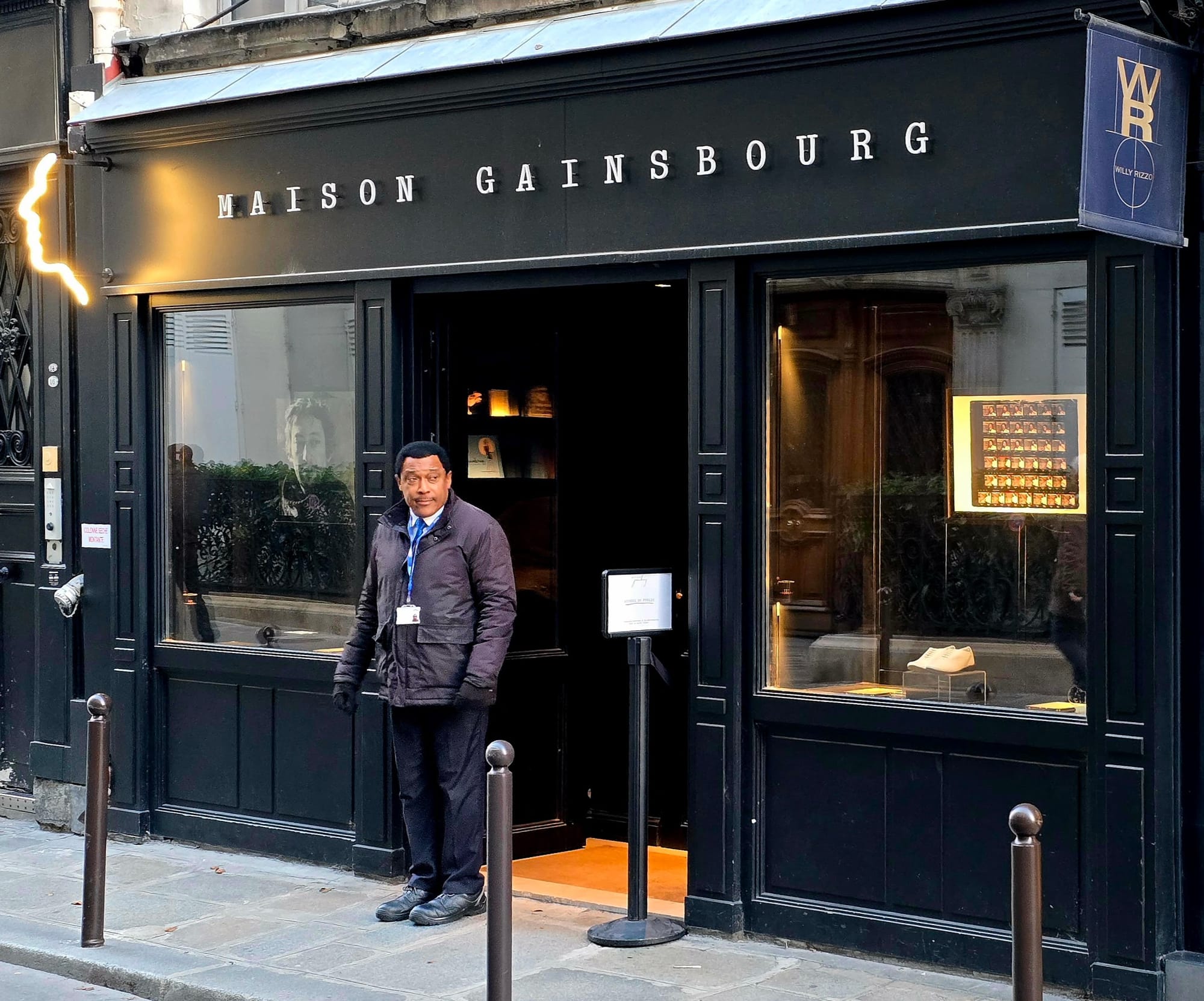
You emerge blinking into the sunlight and cross the road. The museum at number 14 offers a complete chronicle of Gainsbourg’s evolution from Lucien Ginsburg, son of Russian-Jewish immigrants who fled the Bolshevik Revolution, to the “Gainsbarre” persona – the cynical, drunken alter ego of his final years. Nearly 450 items from a collection of 25,000 trace his journey through jazz, yé-yé pop, concept albums, and reggae. Manuscripts, jewellery, clothing, and album covers document a restless genius who, Bowie-like, refused categorisation.
The archival treasures reveal Gainsbourg’s predilections and provocations: the Eurovision-winning Poupée de cire, poupée de son, the scandalous Les Sucettes with its veiled references to oral sex, the reggae Marseillaise that provoked nationalist fury. His 1979 confrontation with paratroopers in Strasbourg, where he sang the anthem a cappella until soldiers saluted, stands as one of performance art’s finest hour.
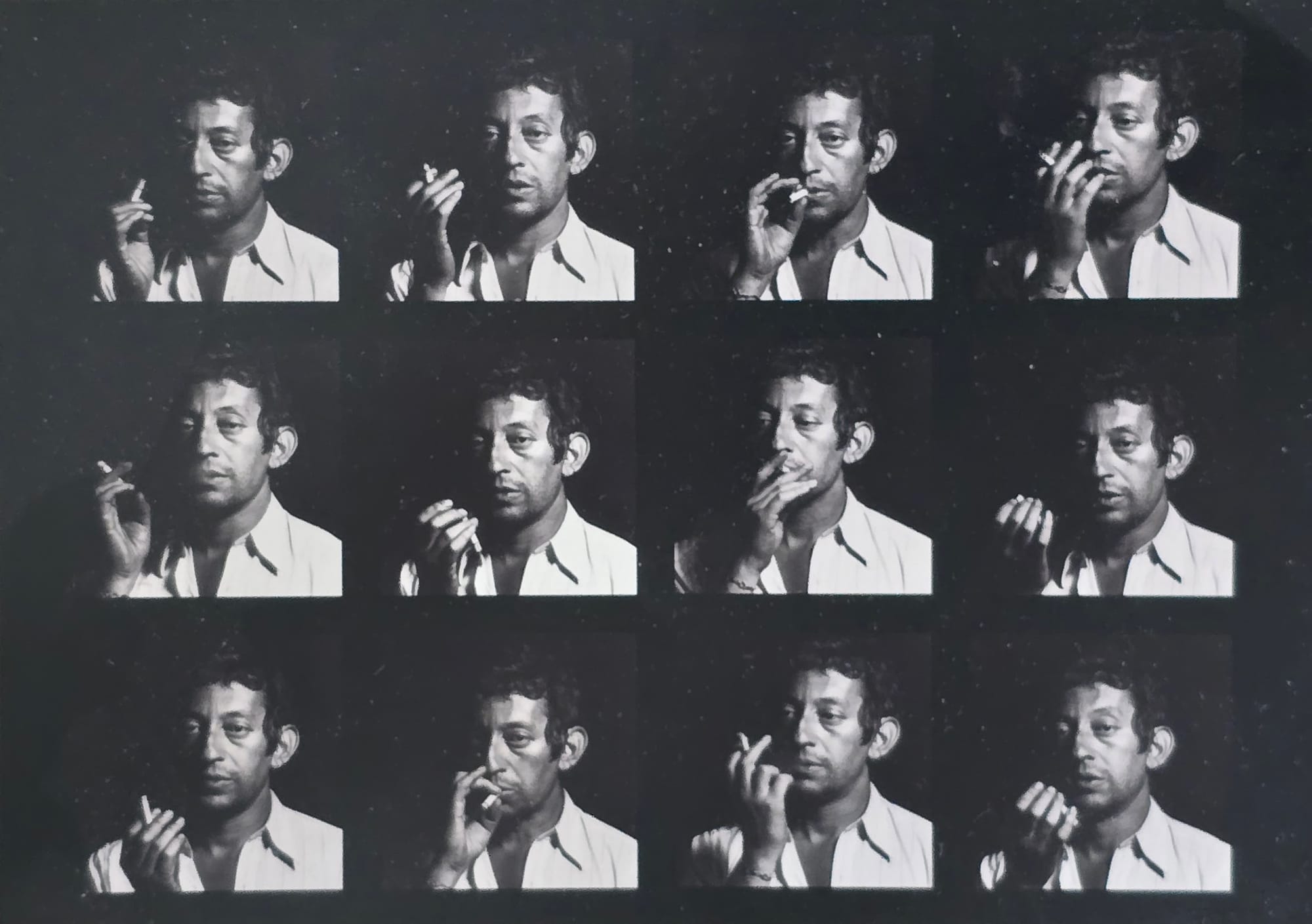
Downstairs, temporary exhibitions explore specific chapters of his life. The inaugural show examined Je t’aime moi non plus, the breathless duet with Birkin that became simultaneously his biggest hit and a moral panic. Here too are traces of his affair with Brigitte Bardot, his four films exploring unconventional desire, and his sole novel about an artist whose medium was intestinal gas – Gainsbourg’s grotesque critique of the art world’s pretensions.
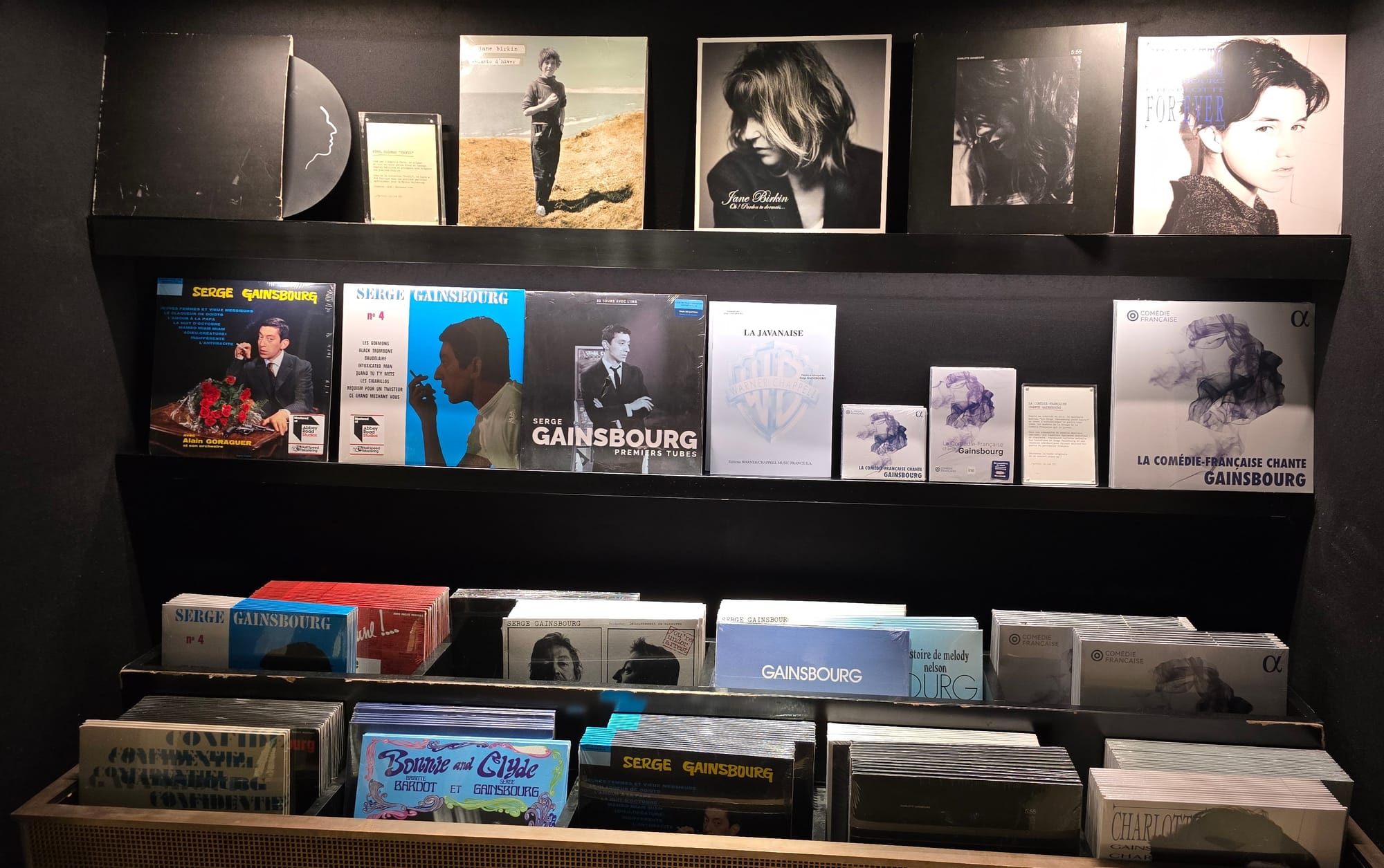
Le Gainsbarre, the café-turned-piano-bar, provides respite. After coffee, you can browse the gift shop’s carefully curated selection of books, LPs and “merch”: among it, Baudelaire’s Flowers of Evil, which influenced Gainsbourg’s poetry, and t-shirts featuring his distinctive profile.
What makes the Maison Gainsbourg an essential part of your Paris itinerary isn’t mere nostalgia. It’s the preservation of creative chaos, the documentation of a man who transformed trauma – wearing the yellow star at 12, fleeing Nazi-occupied Paris – into a unique, sublime and challenging art. His was a life of deliberate provocation: burning a 500-franc note on live television, propositioning Whitney Houston during a broadcast, recording albums that married rockabilly with Nazi imagery to exorcise childhood demons.
The court ruling ensuring the museum’s future recognises its “familial and artistic dimension,” keeping it a “house in motion” rather than a mausoleum. Film screenings, workshops, and concerts maintain Gainsbourg’s presence as an active force in Parisian culture. You leave Maison Gainsbourg equipped with a new lens through which to view the art not just of those other galleries and museums for which Paris is justly famous – but the world.